How Long Can I Wear My Contact Lenses Each Day?

Contact lenses are a great alternative to glasses, but how long can you safely wear them each day? It depends on your lens type, eye health, and how well you care for them. 

Here’s a quick guide to help you out:

1. Know Your Lens Type

  • Daily disposables: Wear up to 12–14 hours, then throw them away.

  • Bi-weekly/Monthly lenses: Can be worn 12–16 hours, but must be cleaned and stored nightly.

  • Extended wear lenses: Some are safe for overnight use (up to 7–30 days) with your doctor’s approval.

Tip: Not all eyes tolerate overnight wear, always check with your optometrist.

2. General Rule: 8–16 Hours a Day

Most people can safely wear contacts for 8 to 16 hours. If you're new to contacts, start with shorter wear times and increase slowly.

Listen to your eyes, if they feel dry or irritated, take your lenses out.

3. Things That Can Shorten Wear Time

  • Dry eyes

  • Allergies

  • Too much screen time

  • Poor air quality (smoke, dust, AC)

4. Signs You’ve Worn Them Too Long

Remove your contacts if you notice:

  • Redness

  • Burning

  • Blurry vision

  • Light sensitivity

  • A gritty feeling

5. Tips for Healthy Wear

  • Follow your eye doctor’s schedule.

  • Don’t sleep in lenses unless approved.

  • Replace lenses as directed.

  • Clean with fresh solution only (never water).

  • Give your eyes a break, wear glasses now and then.

Get Expert Advice from Focus Vision Care

Not sure how long you should wear your contacts? We can help!

At Focus Vision Care, we offer:

  • Custom contact lens fittings

  • Eye exams to check for dryness or irritation

  • Expert advice on what lenses are best for you

Located at 2260 Victory Blvd, Staten Island, NY 10314
Call us at 718 448 1622
Book online at https://www.focusvisioncare.com/

Your eyes are too important to risk, treat them with the care they deserve.


How Do Contact Lenses Work?

Contact lenses are a popular alternative to glasses, but have you ever wondered how they actually work?

Here’s a simple breakdown:

The Science Behind Contact Lenses

Contact lenses sit directly on the surface of your eye (your cornea). Just like glasses, they help focus light correctly onto your retina, so you see clearly.

Depending on your vision needs, lenses are shaped differently to correct:

  • Nearsightedness (myopia) – helps you see far away

  • Farsightedness (hyperopia) – helps you see up close

  • Astigmatism – uses special toric lenses to correct uneven focus

  • Presbyopia – uses multifocal lenses for both near and far vision

Because they move with your eyes, contacts give a more natural field of vision than glasses, and no frames in your way!

Want to Try Contact Lenses?

Our friendly team at Focus Vision Care can help you find the perfect lenses for your eyes and lifestyle.

We offer:

Professional eye exams
Custom lens fittings
Ongoing care and support

Located at 2260 Victory Blvd, Staten Island, NY 10314
Call us at 718 448 1622
Book online at https://www.focusvisioncare.com/

Clear Vision, No Glasses. Let’s Make it Happen!

What Are Contact Lenses?

If you wear glasses, you’ve probably thought about trying contact lenses. But what exactly are they?

Contact lenses are small, thin lenses that sit directly on your eye to correct vision, just like glasses, but without the frames. They’re made from soft or rigid materials and come in many types, including:

  • Daily disposables – wear once, toss away

  • Monthly lenses – reusable for up to 30 days

  • Toric lenses – for people with astigmatism

  • Multifocal lenses – for those who need help seeing near and far

They’re a great option if you want clear vision without the bulk of glasses, or if you're active and on the go.

Are Contact Lenses Right for You?

Most people can wear contacts, but it’s important to have a proper eye exam first. An eye care professional will check your eye health and make sure lenses fit comfortably.

Need Help Getting Started?

Our friendly team at Focus Vision Care is here to help! Whether you’re trying contacts for the first time or just need a new prescription, we’ll guide you every step of the way.

Located at 2260 Victory Blvd, Staten Island, NY 10314
Call us at 718 448 1622
Book online at https://www.focusvisioncare.com/

Let us help you see clearly, No glasses required!


Effects of Blue Light

Ultraviolet and short wavelength light from the sun is at a significantly much higher concentration than light from a computer screen. Blue Light is therefore not likely to cause damage to the eye, but that does not mean it’s innocuous.

Blue light interacts with and suppresses melatonin, which can interfere with our circadian sleep cycles. There is no clear evidence showing blue blocking lenses have any benefit, but there are many accounts of patients using blue blocking lenses and feeling less strain and stress on the eyes, especially when on their digital gadgets.

There is however growing evidence that an increase in screen time can be harmful to physical cognitive and social development in children and is linked with worse psychological well-being.

However, there certainly are benefits also for being on screen time. In young children, programming often viewed on screens can help improve literacy skills, numeracy skills, and social skills. In older children, programming can improve critical thinking. In teens, it can improve reading, writing, social connections and political and social awareness that can help instill personal values, create new creative forms and promote self expression. Since the use of electronic gadgets and digital devices is continuing to grow we can certainly make it a better experience.

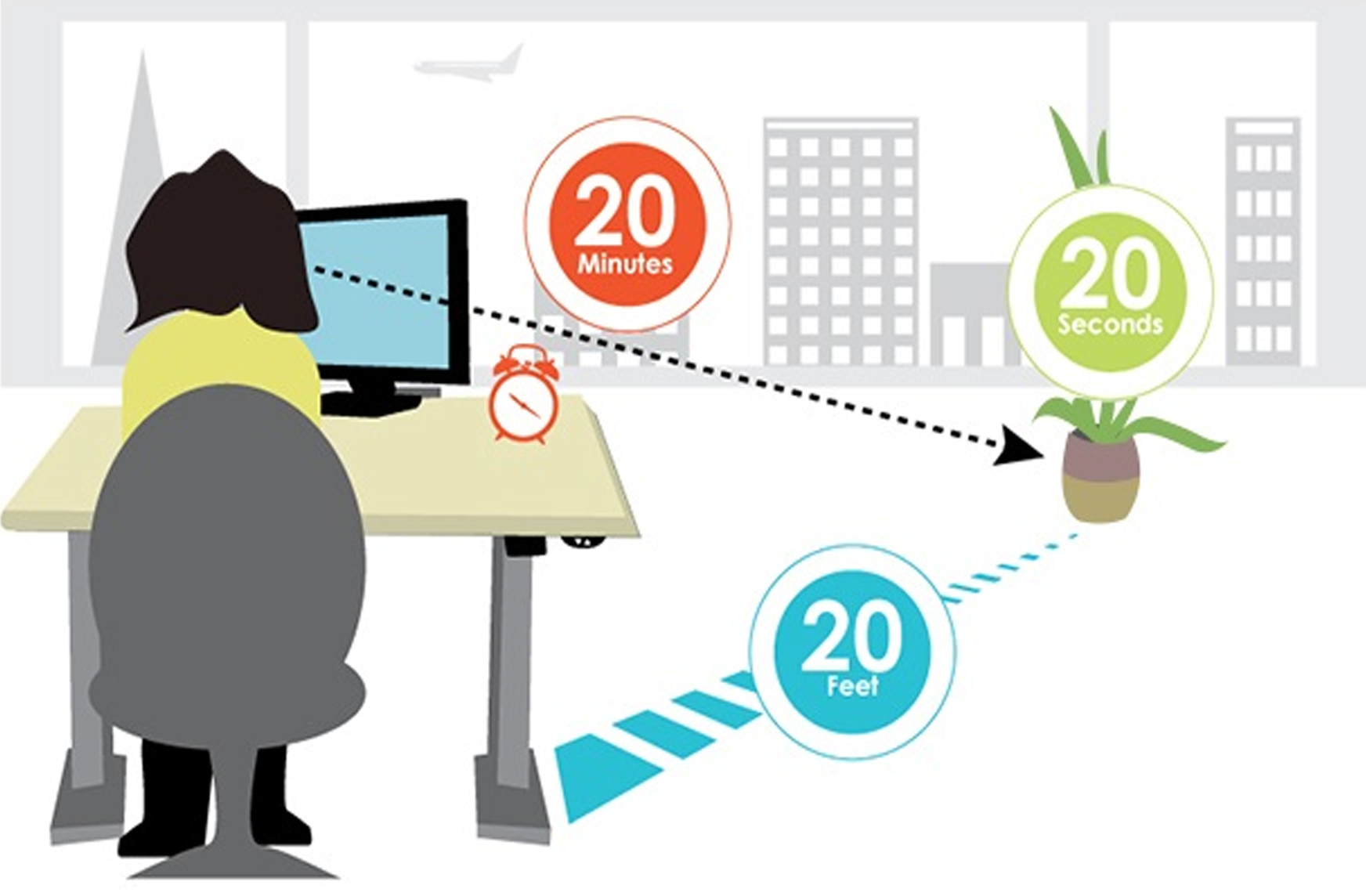
A good thing to practice is applying the 20/20/20 rule, so you take a 20 second break to view something 20 feet away every 20 minutes. This approach will give you a chance to periodically blink and to relax your binocular vision system. Also by adding high-quality artificial teardrops with a lipid component, along with practicing the 20 /20/20 rule may provide additional relief by fortifying the eyes natural tears to stave off evaporation. 

I frequently suggest to my patients to keep the bedroom as a “no electronics zone”. If you must have screen time before bedtime I stress the need to dim your screen either manually or through a filter. As a guideline for children age 2 to 5, screen time should be limited to one hour per day. In children age 6 and older there should be consistent limits on time spent and type of media exposure. I enjoy consulting my patients and ensuring they have the most accurate information. Their focus is my focus too! 

For more information, find us at Focus Vision Care in Staten Island, New York 10314. You can reach us at focusvisioncare.com or focusvisioncareinc@gmail.com. 

Credits: Review of Optometry. Jan 15, 2021. 

NJSOP : Eye on New Jersey, Winter 2020.


A close-up view of a person staring at a digital screen emitting blue light, highlighting the potential effects of blue light on 20/20 eyesight.