
The best foods for eye health are leafy greens, fatty fish, eggs, citrus fruits, nuts and seeds, and orange and yellow vegetables. They contain nutrients such as lutein, zeaxanthin, omega-3 fatty acids, and vitamins A, C and E that help protect your eyes as you age. Food can support eye health and may lower the risk of some eye diseases, but it can't replace glasses or regular eye exams.
What foods improve eyesight naturally?
Here is the honest answer. Food can't fix nearsightedness, farsightedness or astigmatism. Those depend on the shape of your eye, so you still need glasses or contact lenses to see clearly. What a healthy diet can do is help protect your eyes over time and support conditions like dry eye, macular degeneration and cataracts, along with the blood vessels in your eyes.
Key Nutrients for Eye Health
| Nutrient | Why Your Eyes Need It | Where to Find It |
|---|---|---|
| Lutein and Zeaxanthin | Found in the macula; may help filter harmful light and lower the risk of macular degeneration and cataracts. | Spinach, kale, collard greens, eggs, corn. |
| Omega-3 Fatty Acids | Support the retina and may ease dry eye. | Salmon, sardines, mackerel, walnuts, flaxseed. |
| Vitamin A and Beta-Carotene | Help keep the front of the eye healthy and support night vision. | Carrots, sweet potatoes, eggs, dairy. |
| Vitamin C | An antioxidant for the eye's blood vessels; linked to lower cataract risk. | Oranges, grapefruit, bell peppers, strawberries. |
| Vitamin E | An antioxidant that protects eye cells. | Almonds, sunflower seeds, avocado. |
| Zinc | Helps vitamin A work in the retina. | Beans, lentils, poultry, nuts, whole grains. |
What are the 12 best foods for eye health?
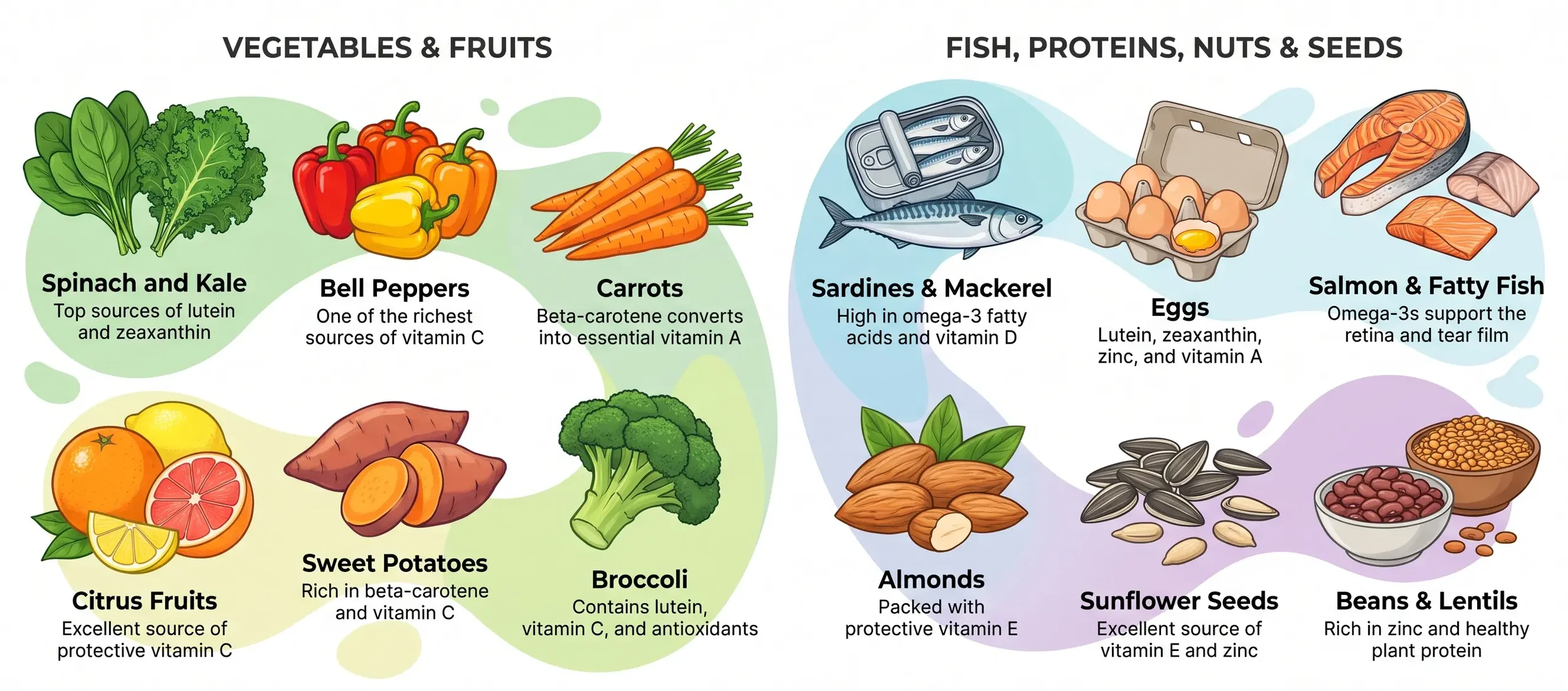
Spinach and kale: top sources of lutein and zeaxanthin.
Eggs: lutein, zeaxanthin, zinc and vitamin A in an easy-to-absorb form.
Salmon and other fatty fish: rich in omega-3s for the retina and tear film.
Sardines and mackerel: more omega-3s, plus vitamin D.
Oranges and other citrus fruits: vitamin C.
Bell peppers: one of the richest sources of vitamin C.
Carrots: beta-carotene, which the body converts to vitamin A.
Sweet potatoes: beta-carotene and vitamin C.
Almonds: vitamin E.
Sunflower seeds: vitamin E and zinc.
Beans and lentils: zinc and plant protein.
Broccoli: lutein, vitamin C and other antioxidants.
What is the healthiest food for the eyes?
There isn’t just one food that can benefit your eyes. Dark green vegetables and oily fish provide the best mix of nutrients. A variety of different colored foods will be more beneficial.
What to eat to have clear vision?
To have clear vision you need to have healthy eyes and the right prescription. Eating a balanced diet which includes the foods mentioned, drinking lots of water and limiting processed foods helps keep your eyes healthy. If you have blurry vision it’s best to visit an eye doctor as there is no way to correct this through food. See our guide to how glasses work.
Fruits good for your eyes
Oranges, grapefruit and lemons for vitamin C
Strawberries and kiwi for vitamin C
Blueberries and other berries for antioxidants
Mango and papaya for vitamins A and C
Avocado for vitamin E and healthy fats
Best food for eyes and brain
The eyes are very closely linked to the brain. There are a few foods that benefit both. Oily fish provide omega 3 fatty acids (such as DHA). Leafy green vegetables, eggs, nuts and berries also help. Research into this area is encouraging but still developing. These foods should be part of an overall healthy diet.
Best food for eye health: vegetarian options
There are lots of great foods that can help keep your eyes healthy on a vegetarian diet. Leafy green vegetables, eggs (if you do eat them), citrus fruits, bell peppers, carrots, sweet potatoes, nuts, seeds, beans, lentils, walnuts and flaxseed. If you want to include omega 3’s but aren’t eating fish, speak to your doctor about taking algae supplements.
Worst foods for eye health
Whilst no food will cause immediate damage to your eyes, some diets can increase your risk:
Highly processed and fried foods (often contain unhealthy fats)
Sugary drinks and foods – can increase your risk of diabetes which is a leading cause of vision loss.
Refined carbs – white breads and pastries have been linked in studies to an increased risk of macular degeneration.
Too much salt – can affect your blood pressure and the blood vessels in your eyes.
Keeping your blood sugar and blood pressure under control is one of the best ways to look after your eyes.
Which vitamin is good for eyes? And what about eye vitamins for blurry vision?
A range of vitamins and minerals are important for eye health. These include vitamins A, C & E, Zinc, Lutein, Zeaxanthin and Omega 3’s. Most can be obtained through food. There is a specific vitamin formula (AREDS2) which has been shown to slow progression of intermediate macular degeneration. It can only be used if you already have macular degeneration so speak to your eye doctor.
It isn’t possible to change your prescription by taking a vitamin supplement. There are many reasons why you could be experiencing blurry vision. Your prescription may have changed, you may have dry eyes or there could be an issue with your eyes. The best thing to do is visit your eye doctor for a full eye examination. If you are experiencing dry eyes we can help with treatments.
Can you improve vision in 7 days?
No food, vitamin or eye exercises will change your prescription in 7 days. If you are noticing your vision is worse your prescription may have changed, you may have dry eyes or there could be another issue. To find out, visit your eye doctor for a full comprehensive eye exam. If your eyes feel dry, our dry eye treatments can help.
Other habits that protect your eyes
Wear UV-blocking sunglasses outdoors
Don't smoke, which raises the risk of cataracts and macular degeneration
Take screen breaks: look 20 feet away for 20 seconds every 20 minutes
Get a comprehensive eye exam every one to two years, or as recommended
Protect your vision with regular eye exams
Good food is one part of eye care. The other is regular exams, which find problems early. Focus Vision Care in Staten Island offers comprehensive eye exams for the whole family at 2260 Victory Blvd, Staten Island, NY 10314.
Contact Us | Call (718) 448-1622 | Walk-ins welcome
Frequently Asked Questions
-
Foods can't correct your prescription, but leafy greens, fish, eggs, citrus fruits, nuts and orange vegetables help protect your eyes and may lower the risk of eye diseases.
-
Dark leafy greens and fatty fish are among the best, because they provide lutein, zeaxanthin and omega-3 fatty acids.
-
Eat a varied diet rich in leafy greens, fish, eggs, citrus, nuts and colorful vegetables, and get regular eye exams. Food supports eye health, but glasses or contacts correct blurry vision.
-
Oranges, strawberries, kiwi, blueberries and mango are good choices because of their vitamin C and antioxidants.
-
Usually not. Blurry vision needs an eye exam to find the cause. AREDS2 vitamins help some people with intermediate macular degeneration only.
-
No. Diet can't change the shape of your eye, so it can't replace glasses or contacts for nearsightedness, farsightedness or astigmatism.