
Aniseikonia is a condition in which your two eyes see the same object as different sizes. The images from each eye don't match, so your brain struggles to blend them into one clear picture. It can cause headaches, eye strain and trouble with depth perception, and it is often treatable. If you suspect it, an eye exam is the first step.
What is Aniseikonia?
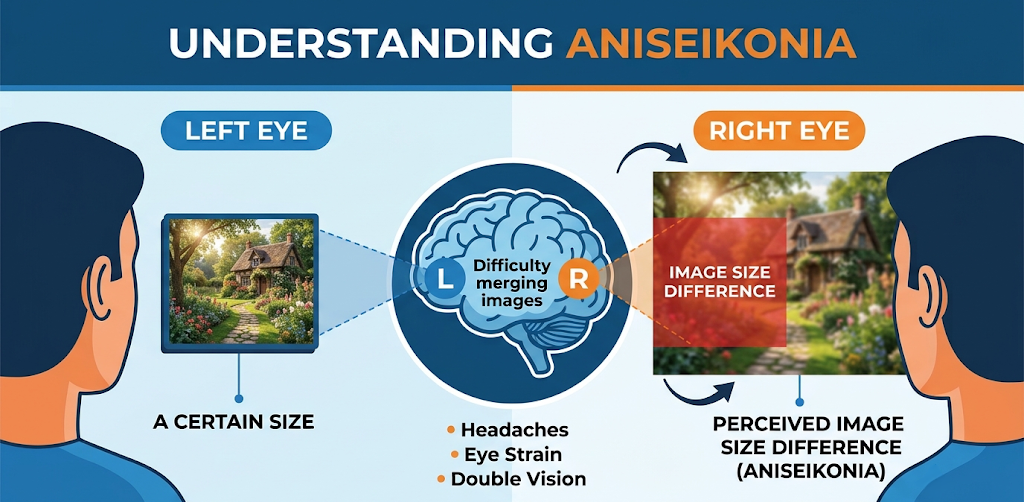
Your brain should receive almost identical images from your right and left eye. However, when suffering from aniseikonia, one eye will be receiving a larger or smaller image. This will usually be a small percentage. If the size difference is small then your brain can compensate, however if it is a larger difference it can become uncomfortable.
The name comes from the Greek word meaning unequal images.
Aniseikonia Symptoms
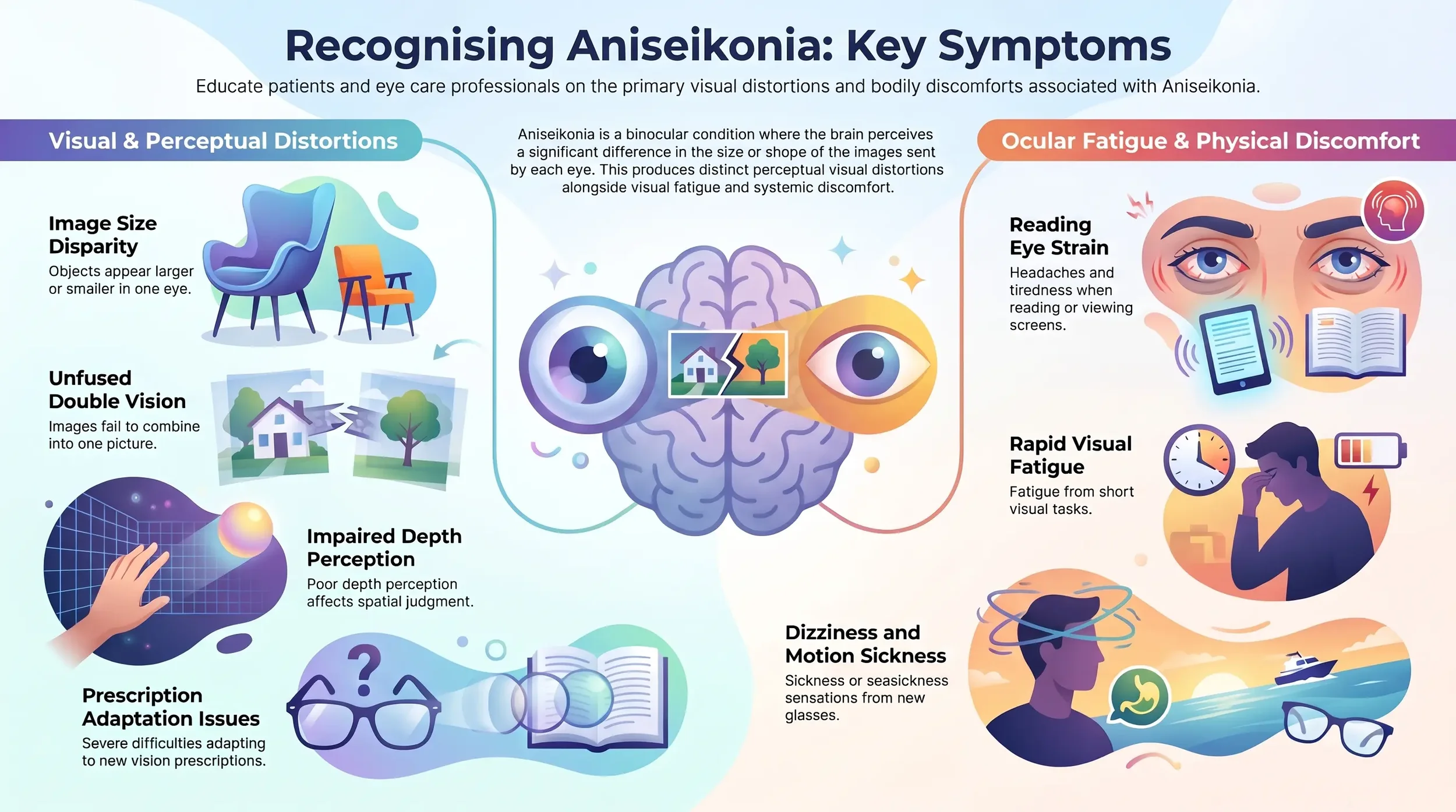
The symptoms depend on the amount of size difference. Many people won’t realize they have this. Common symptoms include:
Headaches, eye strain and/or tiredness when reading or on screen.
Double vision or images don’t appear to combine.
Poor depth perception.
Dizziness, sickness or a sense of seasickness from new glasses.
Objects appear larger/smaller in one eye.
Fatigue from short tasks using your eyes.
Difficulties adapting to a new prescription.
Please note these symptoms can also be caused by other issues, so seeking advice would be best.
What causes aniseikonia?
Optical causes
Most cases come from the optics of the eyes or the lenses used to correct them:
Anisometropia: a large difference in prescription between the two eyes. Glasses magnify or shrink the image, so a strong difference between the lenses can make the two images different in size.
After cataract surgery, especially when only one eye is operated on, or when the lens implants differ.
After refractive or other eye surgery that changes the shape or power of one eye.
Glasses with very different lens powers, shapes or thicknesses.
Retinal and neural causes
Retinal conditions such as an epiretinal membrane, retinal detachment repair or macular swelling, which can stretch or crowd the retina and distort the image.
Differences in how the brain processes images from the two eyes.
The cause matters, because it guides the treatment.
How is Aniseikonia Diagnosed?
You will have a full eye examination. Your optometrist will check your prescription, measure the refractive error in both eyes and check the health of your anterior and posterior eye. They will also ask about your symptoms and any surgeries or retinal issues.
If they suspect you have aniseikonia, there are specific tests that can be carried out to help determine how big a difference there is between the image size.
Aniseikonia treatment: what can help
Treatment depends on the cause and how large the difference is.
Update your prescription. Sometimes the issue is a new or poorly matched pair of glasses. A careful exam can correct it.
Contact lenses. Because contacts sit directly on the eye, they usually change image size much less than glasses, which is why they often help people with a large difference between their eyes. See our contact lens services.
Specially designed lenses. Lenses, sometimes called iseikonic lenses, can be designed with a particular shape, curve and thickness to balance the image sizes.
Treating the underlying cause. If a retinal condition is behind the problem, a retina specialist may be involved.
Time and adaptation. Mild differences often improve as your brain adjusts, but if symptoms continue, don't wait.
There isn't one fix for everyone, so the right plan starts with finding the cause.
When to see an eye doctor
See an eye doctor if you have:
Headaches, eye strain or dizziness that continue after getting new glasses
Double vision, or one eye seeing objects larger or smaller than the other
Vision changes after cataract or other eye surgery
A sudden change in vision, flashes or floaters, or a curtain-like shadow, which are emergencies.
Get your eyes checked
If you have headaches, eye strain or double vision, or you feel that your glasses "just don't feel right", a comprehensive eye exam can find the cause. Focus Vision Care in Staten Island provides comprehensive eye exams, contact lens exams and fittings, and prescription eyeglasses at 2260 Victory Blvd, Staten Island, NY 10314.
Contact Us | Call (718) 448-1622 | Walk-ins welcome
Frequently Asked Questions
-
It is when each eye sees the same thing as a different size, so your brain has trouble combining the two images.
-
Headaches, eye strain, double vision, trouble judging depth, dizziness and difficulty adjusting to new glasses.
-
Most often a large difference in prescription between the eyes, surgery such as cataract surgery, or a retinal condition.
-
Yes. When the lenses for each eye are very different in strength, they magnify the images unequally. Contact lenses often reduce this effect.
-
Often, yes. Contacts sit on the eye and cause less size difference than glasses, so they are a common option for people with a big difference between their eyes.
-
It can happen, especially if only one eye has had surgery. Tell your doctor if you notice a size difference or discomfort afterward.
-
Many people improve with the right correction, such as updated lenses, contacts or specially designed lenses. If a retinal condition causes it, treatment of that condition may help.
-
No. Anisometropia means the eyes have different prescriptions. Aniseikonia means the images look different in size. Anisometropia is a common cause of aniseikonia.