
Glaucoma Symptoms: What to Watch For
Glaucoma is often called "the silent thief of sight" — and for good reason. In its most common form, it causes no pain and no noticeable symptoms until significant, irreversible vision loss has already occurred. Understanding the warning signs, even the subtle ones, and staying current on comprehensive eye exams is the best defense you have.
What Is Glaucoma?
Glaucoma is a group of eye conditions that damage the optic nerve, usually due to elevated pressure inside the eye. The optic nerve carries visual information from your eye to your brain — once it's damaged, that vision loss cannot be reversed. Glaucoma is a leading cause of blindness worldwide, but when caught early, its progression can typically be slowed or stopped with treatment.
The Two Main Types of Glaucoma (and Why Their Symptoms Differ)
Open-Angle Glaucoma (Most Common)
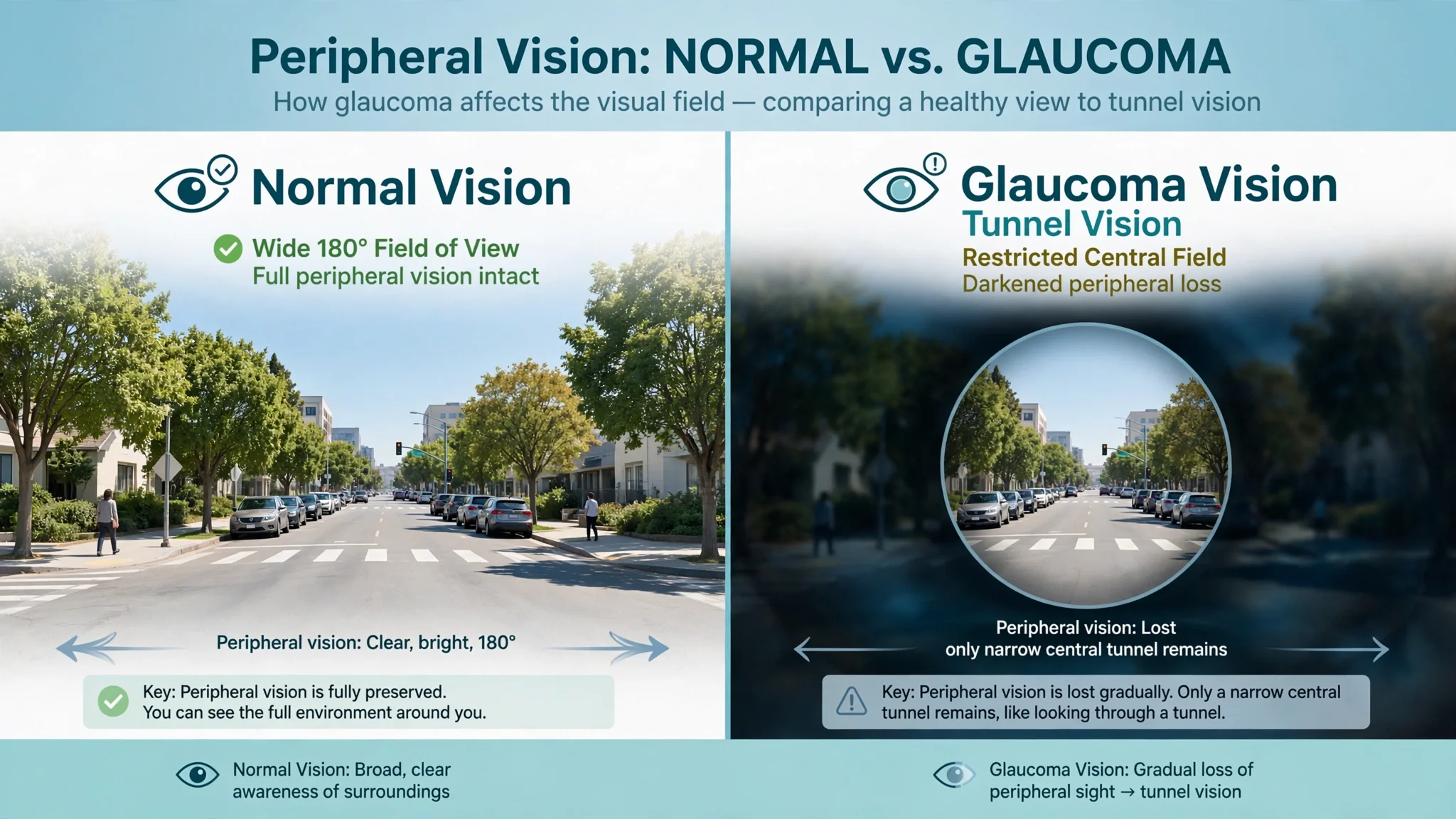
This form develops slowly, often over years, with no early symptoms at all. Peripheral (side) vision is typically affected first, and because the change happens so gradually, many people don't notice until a significant portion of their vision is already gone.
Angle-Closure Glaucoma (Less Common, More Urgent)
This form can develop suddenly and is considered a medical emergency. Symptoms can include:
Sudden, severe eye pain
Blurred vision
Halos or rainbow rings around lights
Nausea and vomiting
Redness in the eye
Sudden headache
If you experience these symptoms, seek emergency care immediately — permanent vision loss can occur within hours.
Subtle Warning Signs Worth Paying Attention To
Because open-angle glaucoma progresses quietly, watch for:
Gradual loss of peripheral (side) vision — often described as "tunnel vision" in later stages
Needing more light to read or see clearly
Difficulty adjusting to dark rooms
Increased sensitivity to glare
Frequent changes in eyeglass prescription
If any of these sound familiar, it's worth scheduling an exam rather than waiting for your next annual visit.
Who's at Higher Risk?
Adults over 60
People with a family history of glaucoma
Individuals with diabetes
People with high eye pressure (ocular hypertension)
Those who are highly nearsighted or farsighted
People of African, Hispanic, or Asian descent (higher risk for certain glaucoma types)
According to the National Eye Institute, these risk factors can raise your likelihood of developing glaucoma several times over compared to the general population.
If any of these apply to you, annual eye exams — rather than every two years — are typically recommended.
How Glaucoma Is Diagnosed
Glaucoma can't be diagnosed by symptoms alone, especially in its early stages. A comprehensive eye exam typically includes:
| Test | What It Checks |
|---|---|
| Tonometry | Pressure inside your eye |
| Optic nerve evaluation | Visible signs of nerve damage |
| Visual field testing | Gaps in peripheral vision |
| Pachymetry | Corneal thickness (affects pressure readings) |
Frequently Asked Questions
-
No, but it can almost always be managed. Treatment — typically eye drops, laser therapy, or surgery — aims to lower eye pressure and slow or stop further optic nerve damage. Vision already lost to glaucoma cannot be restored, which is why early detection matters so much.
-
Adults under 40 with no risk factors are usually fine with an exam every 1-2 years. Adults over 60, or anyone with risk factors like diabetes or a family history, should be screened annually.
-
No. Some people have elevated eye pressure with no optic nerve damage (ocular hypertension), and some people develop glaucoma with normal eye pressure. That's why a full exam — not just a pressure check — is necessary.
-
Family history significantly raises your risk. If a parent or sibling has glaucoma, you're up to 4x more likely to develop it, which is a good reason to mention it at your next exam.
-
Routine screening typically starts around age 40, or earlier if you have risk factors like diabetes, high eye pressure, or a family history of the disease.
Because glaucoma rarely causes noticeable symptoms until damage has already occurred, the most reliable way to catch it early is through regular comprehensive eye exams — not by waiting for warning signs. If you're over 60, have a family history of glaucoma, or haven't had an eye exam in the past year, now is a good time to schedule one.