☎ (718) 448-1622 ➤ 2260 Victory Blvd, Staten Island, NY 10314 ➤ focusvisioncareinc@gmail.com

What is Dry Eye Disease?
Our optometrists examine your eyes and review your medical history to help isolate the reasons you experience due to dry eye regularly.
What is Dry Eye Disease?
Dry eye disease (DED) is a commonly found condition affecting over 16 million American adults today. It occurs when your eyes are unable to stay moist due to inadequate or insufficient tear production. Tears provide the moisture and nutrients that our eyes need to stay healthy and comfortable. When tear production is compromised in quality and quantity it can lead to some of undesirable symptoms such as:
Burning pain
Eye redness
Blurry vision
Mucus-like residue in eyes
Eye fatigue
Watery eyes
Did you know?
** Dry eye is common — nearly 16 million Americans have dry eye.
**Dry eye can happen if you spend a lot of time looking at your computer, tablet, or smartphone.
**If severe dry eye isn’t treated, it can sometimes damage your cornea, the clear outer layer at the front of your eye.
Causes of Dry Eyes
Steady sessions on digital screens can exaggerate the symptoms for someone with chronic dry eye. Although screen time isn’t always the root cause of dry eye disease, long periods on devices certainly don’t help. The initial cause of dry eye can include the following:
Blepharitis (swollen eyelids)
Refractive eye surgery (LASIK)
Smoky, windy, or very dry climates
Certain medications, including those for allergies, those for heart problems, antidepressants, and diuretics
Existing diseases, like thyroid disease and lupus
Hormonal changes in women following menopause
Inadequate Diet.
We strongly recommend that you address the root cause of your dry eyes because it is very critical in finding the right solution. Our optometrists examine your eyes and review your medical history to help isolate the reasons you experience due to dry eye regularly. If you or someone you know is suffering then Book a Dry Eye Exam today and take the first step towards clear, comfortable vision.
Can Screen Time Worsen Evaporative Dry Eye Disease?
One of the reasons your eyes can feel dry is that tears are evaporating too quickly. This is due to an inadequate lipid layer of the tears. The lipid layer acts as an oily barrier to natural evaporation. When glands in your eyelids fail to produce this lipid layer it is known as meibomian gland dysfunction (MGD) and leads to evaporative dry eye (EDE).
Studies suggest that prolonged computer use and exposure to digital screens can impact how quickly our tears evaporate. When tears are evaporating too quickly our eyes start to feel dry. The main reason for increased evaporation is that we blink 66% less when using a computer compared to other daily activities. But you can help your eyes simply by blinking more when staring at digital screens.

Tips to Manage Screen-Related Dry Eye
Being aware that too much screen time increases the symptoms of dry eye disease will help you help yourself. You can limit the consequences of CVS with some of the following techniques. If your dry eyes get worse or the symptoms never go away, it’s best to contact us for a Dry Eye Exam.
Blink Often
Most people blink less when they are using a computer. The average person blinks 15-20 times a minute during everyday activities. This can drop down to only 5 times per minute when you are focusing on a digital screen. So remember to blink every few seconds to help prevent your eyes from drying out!
Stay Hydrated
Keeping yourself hydrated is always a good idea, especially if you suffer from dry eyes. It’s recommended that you drink anywhere between 2-4 litres of water every day, depending on your size and weight. A lack of water can increase dry eye discomfort, so stay hydrated while you’re on the computer.
The 20-20-20 Rule
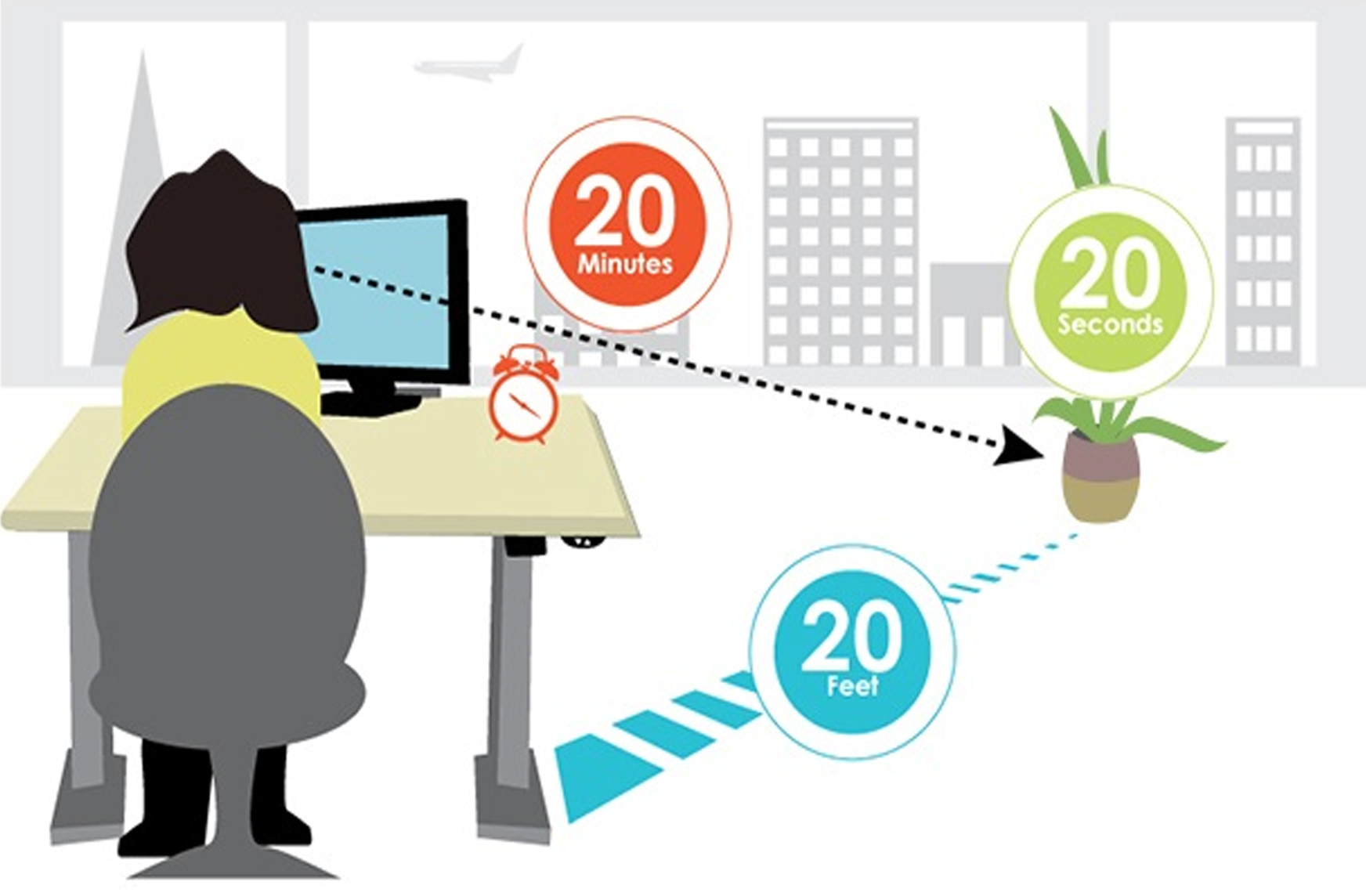
Here’s a simple rule that will help your eyes recover while you’re working on a digital screen. Every 20 minutes, take a 20 second break, and focus on something 20 feet away. This easy-to-do technique will give your eyes some quick relief from staring at screens right in front of you.
Improve Your Air Quality
help reduce dry eye symptoms. Remember that air conditioners lower moisture .Having the right air environment while you work air. Try turning down the AC when you expect a lot of screen time. If your dry eyes are constant when using the laptop, think about investing in a humidifier.
Remove Your Contacts
Your dry eyes may be exaggerated by wearing contact lenses during long sessions in front of digital screens. Wearing contacts creates a barrier that makes it harder for oxygen to reach the eye’s surface. Since we generally blink less in front of a screen, contact use can leave your eyes feeling dry. Consider switching to glasses or changing the type of Contacts when screen time is going into overtime.
It’s normal for your eyes to feel dry after long periods of staring at your computer or cell phone. Dry eyes can be caused by several things, but we often feel increased discomfort after serious sessions on our digital devices. Recognizing digital eye strain as a catalyst for dry eyes can help you try to prevent it from happening.
Too much screen time can expose inadequate tear production in your eyes. Thinking that dry eyes will “just go away” is a foolish choice. Instead, visit us for a Dry Eye Exam. Uncovering the root cause of your dry eyes is the fastest way to use all your screens comfortably and pain-free.
What’s the treatment for dry eye?
Treatment for dry eye usually depends on what’s causing your symptoms. There are a few different types of treatment that can ease your symptoms and help keep your eyes healthy.

Over-the-counter eye drops. The most common treatment for mild dry eye is a type of eye drops called artificial tears. You can get these eye drops without a prescription. There are also over-the-counter moisturizing gels and ointments that may help your eyes feel better. All Teardrops are not created the same. So have your doctor recommend the best for your specific condition.
Prescription medicines. If your dry eye is more serious, your eye doctor may give you a prescription for medicines called cyclosporine (Restasis) or lifitegrast (Xiidra). These medicines are both types of eye drops that can help your eyes make more tears.
Lifestyle changes. If something in your life or your environment is causing your dry eye, or making it worse, your doctor may suggest changes to help protect your eyes.
For example, if a medicine you take for another health condition is causing dry eye, your doctor may also suggest that you try a different medicine.
Your eyes may also feel better if you:
Try to avoid smoke, wind, and air conditioning
Use a humidifier to keep the air in your home from getting too dry
Limit screen time and take breaks from staring at screens
Wear wraparound sunglasses when you're outside
Drink plenty of water — try for 8 to 10 glasses every day
Get enough sleep — about 7 to 8 hours a night
Tear duct plugs. If tears are draining too quickly from your eyes, your doctor may suggest putting special plugs (called punctal plugs) in your tear ducts (small holes in the inner corners of your eyes). These plugs can help keep your tears in your eyes.
Surgery. In some cases, dry eye can happen because your lower eyelids are too loose, causing tears to drain too quickly out of your eye. If this is the cause of your dry eye, your eye doctor may suggest surgery to fix your eyelids and help your tears stay on your eyes. This treatment is not very common.
Talk over your options with your doctor. If another health condition is causing your dry eye, treating that condition may improve your dry eye symptoms. Even if you have dry eye, there are lots of things you can do to help keep your eyes healthy. Remember these tips:
Follow your doctor's instructions for using your eye drops (over-the-counter or prescription)
Tell your doctor if dry eye is getting in the way of everyday activities
Consider lifestyle changes.
Discuss new treatment options including changing the type of Contact lenses you currently wear.
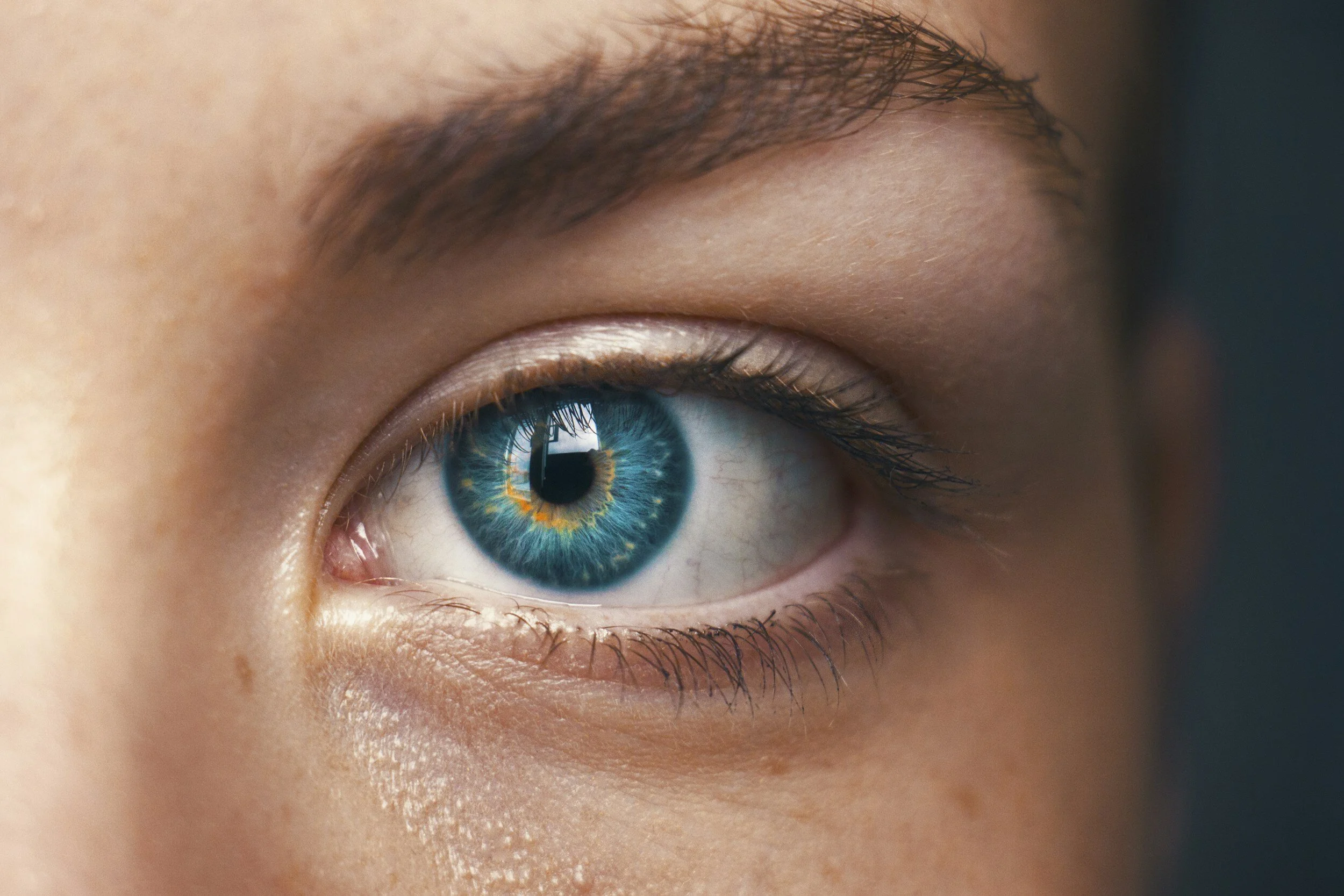
8 Tips to Reduce Eye Strain and Discomfort from Blue Light
If you wonder where to look for help regarding eye strain, here are a few tips that you can incorporate right now that can be helpful to reduce your strain and discomfort. As an optometrist at Focus Vision Care in Staten Island, NY.
8 Tips to Reduce Eye Strain and Discomfort from Blue Light
If you wonder where to look for help regarding eye strain, here are a few tips that you can incorporate right now that can be helpful to reduce your strain and discomfort. As an optometrist at Focus Vision Care in Staten Island, NY. I aim to give my patients the tools they need to improve their eye health.
1. Reading material should be placed no closer than the distance between the center of your middle knuckle to your elbow. And computer screens should be even further.
2. Maintain the 20/20/20 rule. Take a 20 second visual break by looking 20 feet away every 20 minutes.
3. It is best to get up and move as well.
4. Keep hydrated by keeping a closed water bottle beside you.
5. Natural light is the best! So make sure your room lighting is not too dark or too bright.
6. If studying notes or reading a textbook illumination on the screen should be about three times that of the surrounding background.
7. Sloping work surfaces such as a slanted desk tilted 20 to 25° will reduce tension and stress on head, shoulders, neck and eyes.
8. Encourage outside play time as much as possible.
There are many apps available on smartphones tablets and computers to help you set your timer according to your sleep requirement and put your electronics into sleep mode, decreasing the amount of blue light exposure. Additionally, to reduce the strain you can increase the magnification on the screen so that text is 110 to 120% larger.
With the growing use of screens in all walks of life, a balanced holistic approach is of utmost importance. Remember, if you have children at home, make sure that you are modeling proper visual hygiene behavior for them as they will take their cues from watching you.
For more information, find us at Focus Vision Care in Staten Island, New York 10314. You can reach us at focusvisioncare.com or focusvisioncareinc@gmail.com.
Credits: Review of Optometry. Jan 15, 2021.
NJSOP : Eye on New Jersey, Winter 2020.
Effects of Blue Light
Ultraviolet and short wavelength light from the sun is at a significantly much higher concentration than light from a computer screen. Blue Light is therefore not likely to cause damage to the eye, but that does not mean it’s innocuous.
Blue light interacts with and suppresses melatonin, which can interfere with our circadian sleep cycles. There is no clear evidence showing blue blocking lenses have any benefit, but there are many accounts of patients using blue blocking lenses and feeling less strain and stress on the eyes, especially when on their digital gadgets.
There is however growing evidence that an increase in screen time can be harmful to physical cognitive and social development in children and is linked with worse psychological well-being.
However, there certainly are benefits also for being on screen time. In young children, programming often viewed on screens can help improve literacy skills, numeracy skills, and social skills. In older children, programming can improve critical thinking. In teens, it can improve reading, writing, social connections and political and social awareness that can help instill personal values, create new creative forms and promote self expression. Since the use of electronic gadgets and digital devices is continuing to grow we can certainly make it a better experience.
A good thing to practice is applying the 20/20/20 rule, so you take a 20 second break to view something 20 feet away every 20 minutes. This approach will give you a chance to periodically blink and to relax your binocular vision system. Also by adding high-quality artificial teardrops with a lipid component, along with practicing the 20 /20/20 rule may provide additional relief by fortifying the eyes natural tears to stave off evaporation.
I frequently suggest to my patients to keep the bedroom as a “no electronics zone”. If you must have screen time before bedtime I stress the need to dim your screen either manually or through a filter. As a guideline for children age 2 to 5, screen time should be limited to one hour per day. In children age 6 and older there should be consistent limits on time spent and type of media exposure. I enjoy consulting my patients and ensuring they have the most accurate information. Their focus is my focus too!
For more information, find us at Focus Vision Care in Staten Island, New York 10314. You can reach us at focusvisioncare.com or focusvisioncareinc@gmail.com.
Credits: Review of Optometry. Jan 15, 2021.
NJSOP : Eye on New Jersey, Winter 2020.
Digital Screen Overload
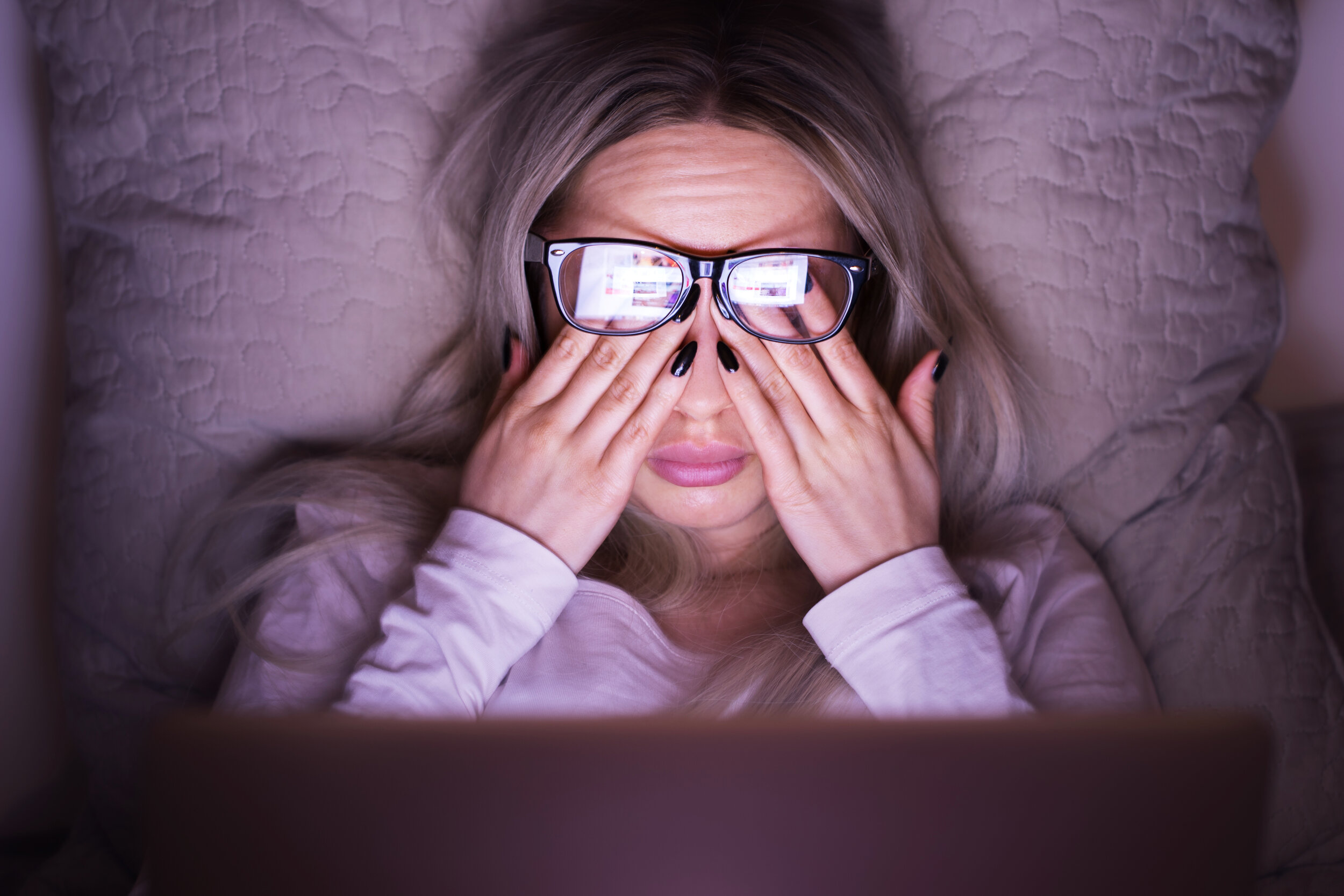
Reflecting on the effects of our lives during this pandemic, one thing is clear: our screen time has increased. Whether it’s for learning, education, entertainment or even to stay connected to the outer world. More people have complaints of visual discomfort from computers and other digital devices.
Digital strain or the “Computer Vision syndrome” commonly occurs when the visual demand of prolonged screen time causes symptoms of eyestrain, headache, blurred vision and eye irritation.
Because of convergence and accommodate function put at excessive demand, many people also suffer from headaches.
Additionally, blink rate drops from 12 blinks per minute to 6 blinks per minute during work near the computer. This reduction in blinks can cause the tears to evaporate leading to dry eyes.
By the way, this digital screen overload is not only experienced by you, but also by your kids.
As many companies have increased work from home and online school, millions of Americans have also suffered from computer vision syndrome or digital eye strain because of prolonged hours of looking at the screen. The symptoms can vary from irritation, redness, dryness, blurry vision, double vision, back pain, neck stiffness, eyestrain, watering, and headaches.
Our mission at Focus Vision Care, in the changing scenario is, to help by doing our part as educating visual hygiene and providing the right tools to perform comfortably. When patients see a remarkable difference in their symptoms, they thank us for guiding them on selecting vision care products.
Our role in this is to be an eye care provider that works with you. We would suggest the first step of any intervention plan is to ensure that you have accurate, up-to-date spectacle and contact lens prescriptions. Regular annual exams can achieve this. If you’re in the Staten Island, New York area, our office is open! To evaluate for your contributing factors, we offer a full visual evaluation. We even do binocular and oculomotor function tests and assess ocular surface health during a comprehensive examination.
For more information, find us at Focus Vision Care in Staten Island, New York 10314. Contact us for an appointment : https://www.focusvisioncare.com/contact or email us at: focusvisioncareinc@gmail.com.
Credits: Review of Optometry. Jan 15, 2021.
NJSOP : Eye on New Jersey, Winter 2020.